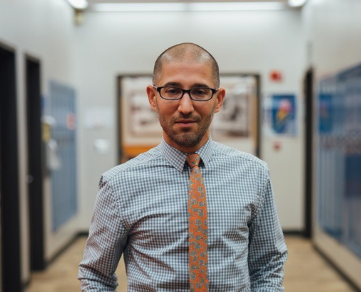
Eric Filardi · Principal, Mendenhall River Community School
When recognition depends on a school leader's extra energy, it disappears the moment things get hard. The shift that sticks isn't caring more; it's building a reliable habit around it.
"Great job" doesn't land. Try "I noticed ___. It mattered because ___. Thank you for ___." and pull families, colleagues, and community members into staff recognition, because it's far more believable when it isn't only coming from the principal.
The magic isn't in the activity—it's the cadence. Build daily, weekly, and monthly staff recognition moves that pass the "February test": simple enough that a tired school leader will actually keep doing them.

Principal, Mendenhall River Community School
Eric leads Mendenhall River Community School in Juneau, Alaska, where his work centers on inclusive, student-centered learning, Responsive Classroom practices, and a strong collaborative staff culture. A career Alaska educator with earlier roles in Anderson and Nenana, he mentors fellow administrators and is completing superintendent certification coursework.
0:08
And while we're doing that, uh, want to give a warm welcome to Eric Filardi. He is closing us out today on this track.
0:16
He's the principal at Mendenhall River Community Schools in Alaska. He's turned staff recognition from really like a
0:24
one-off event into a really sustainable habit that lasts. So, if you would open your workbooks uh to page 57, you'll be
0:32
in the right spot. And then let's welcome Eric with some applause emojis in the chat, shall we? Thanks so much.
0:40
I'm gonna stop sharing. It's all you, Eric. Amazing.
0:47
And Jessica, can you just confirm? Can everybody see my screen right now? Am I still sharing?
0:55
You're muted. I was muted again. Yeah, it's, you know, a whole thing. I can see your screen.
1:00
Yep. Um, if if for some reason you can't see Eric's screen, look at the top of your uh Zoom window and just be sure you've clicked on the tab that says Eric
1:08
Fard's screen and you should be off to the races. Amazing. Great. Thanks so much, Jessica. Mhm.
1:14
Um, so like Jessica introduced, uh, this this session is all about recognition and finding recognition that sticks in
1:22
our buildings or our places of work or even in our own lives. Um, I've carried a lot of what I'm talking about today
1:30
um, throughout everything that I do just as a human, let alone as a professional.
1:35
Um, and I have another quick question for us as people are kind of coming into the space and getting settled. Um, what does recognition currently look like in
1:44
your building? Is it currently a random acts, b a few routines, or c true
1:51
systems? Um, and as you kind of choose what resonates for you and might might be true for your space, go ahead and
2:00
drop that in the chat. And I'm just going to talk a little bit more about my background. Um, like Jessica said, I am the principal of Mendenhall River Community
2:08
School, which is an K through six, actually a preK through six elementary school in Juno, Alaska. And I have the pleasure of actually presenting from the Alpaca offices in Omaha, Nebraska today.
2:20
I am the the one person that refused to take this as a virtual session, so I came here in person. Um,
2:29
and so I'm looking into the chat right now and I see a lot of A's and B's, a
2:36
mix of A and B's. Um, C for students. Okay, that's great. Um,
2:44
and that kind of makes sense. I think most of us really care deeply about recognition. But the thing that I've
2:52
recognized is that care is not the same thing as a system. So what I want to talk about today isn't staff
3:02
appreciation week. It isn't donuts. It's not jeans passes or gift cards. And not to say that those things aren't fine. Um
3:10
I use a lot of those tools. Um, but I've learned something the real hard way,
3:18
which is that if recognition depends on my extra energy, then it disappears the
3:25
moment that things get hard for me. And I think we all know that leadership gets really, really hard. The weeks get busy,
3:34
somebody will quit, crisis happens, the budget falls apart, and we spend a lot of our time putting out fires. And what
3:42
we have to think about is that if recognition only lives in our good intention, then it won't survive those weeks. And so what really changed for me
3:51
was moving recognition from a big effort to a habit that I can keep all of the time.
4:04
So, like I mentioned, if recognition only lives in our good intentions, then it doesn't survive those weeks. So, I
4:11
want you to think quietly just for a few seconds right now. When is it that recognition tends to fall off your radar as a leader?
4:23
And for me, like I mentioned, it's the week with seven discipline incidents, the budget meeting, the substaffing scramble, the angry parent email, and
4:32
the fire drill that are all living within the same 3-day period. Um, so think about that for a second, like when
4:40
when does recognition tend to fall off your radar? And feel free to drop that in the chat if you'd like.
5:04
Yeah. When calendar is full, when is it not?
5:14
Julie, I hear that after first quarter, and we're going to talk about that in a minute, too.
5:22
Yep.
5:24
All of those small fires that combine to become big ones.
5:32
So, this is the shift that I had to make in my own leadership. Um, and I'll say like I've always cared about recognizing
5:40
people, but caring about something and having a really reliable practice for it
5:46
are not the same thing. Good intentions are really fragile and like I mentioned,
5:53
they really depend a lot on my energy and my memory and whatever else is happening that day. So a habit is what I
6:03
recognize and what I'd like to talk about today is what's really different.
6:08
When recognition becomes part of the daily flow of our leadership, it's much more likely to survive those hard weeks.
6:17
And that doesn't mean that it has to be complicated. It just means that we have to build small repeatable practices that
6:24
make appreciation something that we do on purpose and not something that we hope to remember to do.
6:34
So, I'll be really honest with you. I am not naturally a systems person. Um, I think people tend to assume that
6:42
principles are organized and systematic and have color-coded binders for everything. But um if you recognize the picture that's on the screen, I am a
6:50
Charlie Day from It's Always Sunny. Um and I am like the dumpster fire principal. So what I've learned is that
6:58
if I cared about something, then I needed to build a system around it.
7:10
So, I'm going to jump back in time for a minute and say that a few years ago, our school had a reputation and it was not a
7:20
great one. If people were ranking schools in our district, we were often near the bottom of that conversation.
7:27
And the really terrible thing is that staff knew it and families knew it and the community knew it. And honestly,
7:36
that kind of narrative starts to seep into a building. And not because it's true, but because people hear it enough.
7:48
And so what changed wasn't a program and it wasn't a curriculum and it wasn't some sort of magical initiative. Um, we
7:56
just really worked on starting to intentionally tell a different story.
8:02
And not a fake positive story and not one that ignored all of the hard parts, but one that named what was already
8:09
good. Staff showing up for kids, families trusting us, and people supporting each other. We started
8:17
celebrating these things that were already good. We started recognizing people more intentionally. We started making sure that families saw great things. We started making sure that the
8:25
community saw great things and we started helping staff see great things in one another. And eventually what
8:33
happened was the story changed. And when that recognition came from families, community members and colleagues and not
8:42
just me, that's when it became more believable. That's when recognition
8:49
started to shift from appreciation into culture.
8:58
And so one of the things that I'm really most proud of um is that recognition stopped being something that came from only me because honestly the principle
9:06
shouldn't be the only source of affirmation in a building. It's too fragile. It's too limited and it's too dependent on just one person.
9:22
And so what I'm going to talk today is about how I turned this into a framework of sustainability. And it's called the habit framework just because like I
9:30
said, I had to turn it into a habit for myself. But before I reveal the full framework, um I just want you to drop into the chat, what is one word for you
9:39
that makes recognition feel truly authentic instead of just performative?
9:46
So, one word for you that makes recognition feel authentic instead of just performative.
10:01
Yeah, I'm seeing a lot of specific, honest, intentional, genuine.
10:09
And that's basically the session. That's what we're talking about. specific, honest, personal, sustainable, and the
10:17
framework just gives us a way to make that happen on purpose.
10:24
And so you'll see in in um our notebook shared with us, our workbook shared um
10:31
the one of the very first pages is what does recognition currently look like in our building? And it has each section of the habit framework in there. Honor the
10:40
work specifically, activate more voices, build a cadence, inspect what's landing, and tell the story. And you can either
10:47
do this right in your workbook or even on a separate piece of paper, but just take a quick moment and give yourself a a quick temperature check. Green is this
10:56
is something that is always happening in my building. Like it it's it's already there. There isn't much lift that I need to provide in order to to keep it going.
11:07
Yellow is um you know it it happens occasionally but I I want to continue to work on that and and nurture and grow it
11:14
a little bit more. And red or pink is this is really happening infrequently.
11:20
It's either as a one off. It's it's not happening at all or it's in a weak place and it it needs some love.
12:07
and as you're rating yourself and maybe finishing up that rating, I'll say like the the intention here is that this is something practical, a framework that we
12:16
can actually use because the goal isn't more effort. The goal is to create sustainable habit.
12:31
So the first step of our framework is honor the work specifically because specific beats generic every time. Um
12:40
it's like somebody walking up to you and saying great job. Okay. Well, great job doing what? um recognition really
12:50
becomes meaningful when it names the actual behavior. So something that I've learned to do is to use a simple formula and I put that at the bottom of the slide for us. I noticed blank.
13:01
It mattered because blank. Thank you for blank.
13:09
And so this might be walking up to a teacher and saying,"I noticed how you handled that student during dismissal and it really mattered because you
13:18
preserved their dignity in front of their peers. Thanks for staying calm and patient." And so something like that is really real and believable.
13:31
And so like take a second right now and you know go ahead and in your mind or
13:38
jot it down on a piece of paper complete that sentence. Write one I notice sentence in your notes not in the chat
13:46
just personal for you. And the real pro tip here is don't write the sentence for your best teacher. Write it for the
13:53
teacher that might not always get noticed first.
14:34
and the good news is if you're struggling to finish it now, you'll have access to our workshop presentation and these slides later on.
14:50
So our next step in the habit framework is to activate more voices and get some appreciation coming in from all
14:57
directions. And I have to say that this might be the most important one of all.
15:04
Like I mentioned, recognition really becomes more believable and more impactful when it comes from diverse
15:11
resources or diverse sources, including parents and colleagues and community members and really
15:20
fosters a collaborative environment that values everybody's contributions. So think for a second about who else can
15:28
carry that recognition aside from yourself. Is it families? Is it colleagues? Is it community partners? Is it PTO? Is it district leaders?
15:39
And so at our school now, we actively invite those voices into the process.
15:44
And one of the most powerful moments I've seen um in this recognition wasn't when I recognized the teacher, it was
15:53
when a parent did or when another teacher did or when the community did.
15:58
We um had one of our teachers that was voted best of Juno this year. Um and the power in that community recognition
16:07
was incredible because when the appreciation comes from more voices, it becomes more believable. You start to
16:14
trust it when you hear it coming from others than just your building administrator.
16:29
So in our um notebook, I'm going to ask you to do a quick map. And again, not because you need another worksheet, but because many of us are carrying
16:38
recognition alone that we actually don't have to. So we're going to take two minutes right now. I'm going to put two minutes on the clock and we're going to
16:47
to complete this workbook page um or on a separate piece of paper and we're going to write down who currently
16:54
provides recognition in our building or our workplace and then who could
17:01
staff students families classified staff PTO community partners district leaders.
17:08
So go ahead and do this right now. We've got about two minutes on the clock.
18:05
about halfway through. One more minute.
18:37
and we're going to go ahead and get ready. We're going to drop one person or group into the chat that we aren't fully utilizing yet.
18:54
Alyssa, I'm gonna I'm gonna get to that in a minute about how we collect the recognition. And thanks so much. I uh if
19:02
anybody has any questions at all, feel free to ping them in the chat or interrupt. You can come off mute and interrupt me at any point. We've only got 30 minutes for these sessions, so
19:10
I'm kind of flying through, but please feel free to jump in.
19:14
Okay. So, we're going to drop our one person or group into the chat that we aren't fully utilizing yet. I see grantee for our school. Go ahead and
19:22
drop our people in. Families, staff, students.
19:34
Yeah. See, this is one of the biggest opportunities that we have in schools.
19:40
So many of us as building leaders are carrying recognition entirely on our own and we don't have to delegate.
19:56
So our next step in the habit framework is building a sustainable cadence and this is where systems matter and not
20:04
just more work just predictable work. So the goal is to establish a repeatable system where
20:13
recognition becomes part of our daily life, ensuring that it's really meaningful without overwhelming ourselves or our staff with extra tasks.
20:24
And for me, I really like to think about this in three buckets. Daily, weekly,
20:30
and monthly recognition moves. So daily might be two specific acknowledgements.
20:36
Every day I'm going to go out and I'm going to find two people that I'm going to acknowledge really specifically what it is that I notice them doing. Um,
20:44
weekly might be at an all staff meeting where we have a staff spotlight, something amazing that happened in a classroom that week that we're going to
20:51
share out to our entire crew. And monthly might be a larger celebration or a community recognition, a unity
20:58
assembly in our gym, inviting all families in and celebrating like a classroom accomplishment or a staff member's achievement in a specific area.
21:08
And so this is where like we can get caught up in the weeds, but the magic isn't in the activity itself. The magic is the consistency.
21:19
When we're consistent with whatever it is that we're choosing, that's when it becomes really important, and everybody
21:27
sees it, everybody expects it, and everybody finds joy in it.
21:35
So, we've got these workbooks and I am intent on using them. If you don't commit to doing it now, find some time later on. like I'm I'm really proud of
21:44
the pages that we've got in there. But what I want to do right now is build something and it's going to be quick.
21:51
It's going to be off the top of our head and like I said, the magic isn't in what it is that we choose. It's in the consistency. So, open up your workbook
22:00
or grab a separate piece of paper again and we're going to build something. And it's not a five-year plan. This is like the next Monday that we've got school
22:09
plan. And so what we want to do to identify right now is a daily move, a weekly move, and a monthly move. You can
22:18
take a look at the examples that we have up here on the slide. And as we're thinking of this, um I I want to say like we're going to keep it realistic
22:26
and coming back to what we said before like after quarter one things kind of drop off. So what I'm going to say here is that it has to pass the February
22:34
test. We're not building the version of our self that exists in August at the start of the year. We're brighteyed and bushy tailed. We're building the version
22:43
that exists in February because February you has to actually sustain it.
23:07
So think through those daily, weekly, and monthly tasks. And I'll say for me
23:13
the the key words within cadence are the rhythm and consistency.
23:20
Recognition doesn't have to be something elaborate every time. In fact, I really think sometimes I overco complicate it
23:29
and I I would assume that many others do too. Really, what matters most is that
23:36
people can feel a pattern. They know that good work is going to be noticed, that effort is going to be named and
23:44
that appreciation isn't just going to show up during staff appreciation week or when I suddenly remember like, oh shoot, I should say thank you for that.
23:54
When recognition has a rhythm, it really starts to feel trustworthy. It becomes part of how the building operates. And
24:02
the activity itself can be simple, but like I said, it's the consistency that makes it meaningful and magical.
24:13
And so our eye is inspect what's landing. And this is probably where I differ from some normal appreciation
24:22
conversations because I really feel like we should be looking at data and not because everything needs to have a spreadsheet, but because we should ask
24:31
who's being recognized, who's getting missed, what's actually resonating, and what
24:38
feedback are we hearing? And so at my school um we really lean into the tool
24:45
of Alpaca pulse to give this valuable insight because I can see like right in front of me whether or not people feel
24:53
actually seen. So we use our alpaca pulse survey on monthly basis. Staff can contribute their feedback through the
25:01
survey and then I can visualize exactly what it is that staff are feeling.
25:06
they're feeling really acknowledged and appreciated this month or maybe they're feeling really fatigued and then I can
25:12
dial into what our routines are to support those specific needs as a building.
25:21
Data becomes really critical at this point.
25:32
And lastly, our T is telling the story.
25:37
What story is our recognition telling about who we want to be and who we are?
25:44
And so this is the culture work.
25:47
Recognition isn't just about making people feel good. Recognition tells
25:53
people who we are. Every time we celebrate something, we are saying this
26:00
is what matters here. When we recognize collaboration, we're saying collaboration matters. When we recognize risk-taking, we're saying that we value
26:08
innovation. And when we recognize kindness, we're saying like we are a culture of kindness here. Kindness matters.
26:19
Recognition is what teaches our culture.
26:30
And so this is where recognition really becomes more than just being nice. It becomes part part of how we grow the
26:38
culture of our buildings. And I try not to look for perfection here. Really what it is that I'm looking for is patterns.
26:49
Who's being recognized? What might be getting missed? What kinds of contributions are we naming over and
26:56
over again? And staff and feedback and participation data really helps me see whether or not the recognition that
27:05
we're providing is actually landing or if it's only reaching the people who are already most visible. And that's what
27:13
matters because whatever we recognize is what we tend to grow. And when we name collaboration, we get more
27:21
collaboration. When we acknowledge risk-taking, people feel safer trying new things. When we celebrate kindness,
27:29
we build a culture where care is not just expected, but it's noticed.
27:38
So, go back to your recognition cadence planner. Um, and I want you to choose just one thing, not three, not 10, just
27:47
one. And what is one recognition habit that you want to start in the next 30 days? And if we're at the end of your
27:56
school year, like think about this for the first 30 days of next school year.
28:01
Um, and think through like what is your move going to be, who is it going to involve, when are you going to do it, and how will you know it's working? And
28:11
then get ready. What I want you to do is type it into the chat box, but don't hit enter yet.
28:18
So you don't have to type all of these.
28:20
Just your one move, just that that first query there. What's the the effort that you're going to try to implement
28:29
and you can snag this right from your cadence planner from earlier. Get it ready.
28:36
Type it into the chat box, but don't hit enter yet.
28:45
And as you're getting that typed in there, I'm going to say just two more things. One is that we need to remember recognition should not mask our
28:53
challenges. It shouldn't trivialize hard work. It really needs to focus on genuine contributions and celebrate
29:00
progress and help our crew feel valued and motivated even when things are difficult.
29:10
Don't hit Andrew yet. I'll say it in just one moment, but I'm going to leave you with this that honestly last year um not this year
29:18
that just ended, but the year before was one of the hardest years of my entire career. I was really burnt out. I was
29:26
discouraged. And I really even questioned whether or not I wanted to stay in the profession. And what helped
29:33
me wasn't pretending that things were fine. It wasn't toxic positivity. And it wasn't pretending that education isn't
29:41
hard. What helped was getting very intentional about noticing what was still good. The people, the moments, the effort, the growth, and the small wins.
29:55
Recognition does not solve every problem. It won't fix budget. It won't fill vacancies, and it definitely won't
30:03
erase stress. But it absolutely changes how people experience the work and over time it changes the story of a school.
30:14
So what I'm asking you to think about today is how can you start small? How can you make it real? How can you invite
30:22
more voices and check what's landing and then keep going? Because little wins become culture when leaders notice them,
30:32
name them, and share them. So, go ahead and hit enter in the chat right now and share out what your goal is. Oh my gosh, this waterfall is amazing.
30:43
Thank you all so very much. Beautiful.
30:50
My contact info is up on the screen if anybody has lingering questions. And then the QR code is the link to my um
30:59
Alpaca podcast where I had the the wonderful opportunity to get interviewed here by the team at Alpaca. So, thank you all so very much for joining the
31:07
session. I hope that what I had to offer was valuable. Please reach out with any questions. Um and thank you for your time today. This was beautiful.
A 28-page companion built around the workshop. Use it to capture notes, find your three takeaways, and plan the year ahead.